PDF – Roy Knot PLUS 11:12:21
The Aussie ‘Roy Knot +’ for Kiwi trees
This Knot was notably brought to attention of Aussie canyoners by Roy Barnes and Richard Delaney from Rope Lab in 2019.
Some canyons require the use of tree belay stations – what is the best choice of materials?
Over the years I have replaced literally 100s of metres of webbing around trees, which really adds up. Webbing suffers in direct sunlight / UV in a few months, it needs replacing regularly. Out of direct UV it ‘can’ last a few years, but how do you know if the sun shines on it? Webbing is great for temporary or remote canyon locations or where it is maintained!
Rope is clearly a much better option in NZ’s harsh UV than webbing. It will last longer, but can ring bark Kiwi trees without protection (some trees have soft bark) killing them, anchor gone!
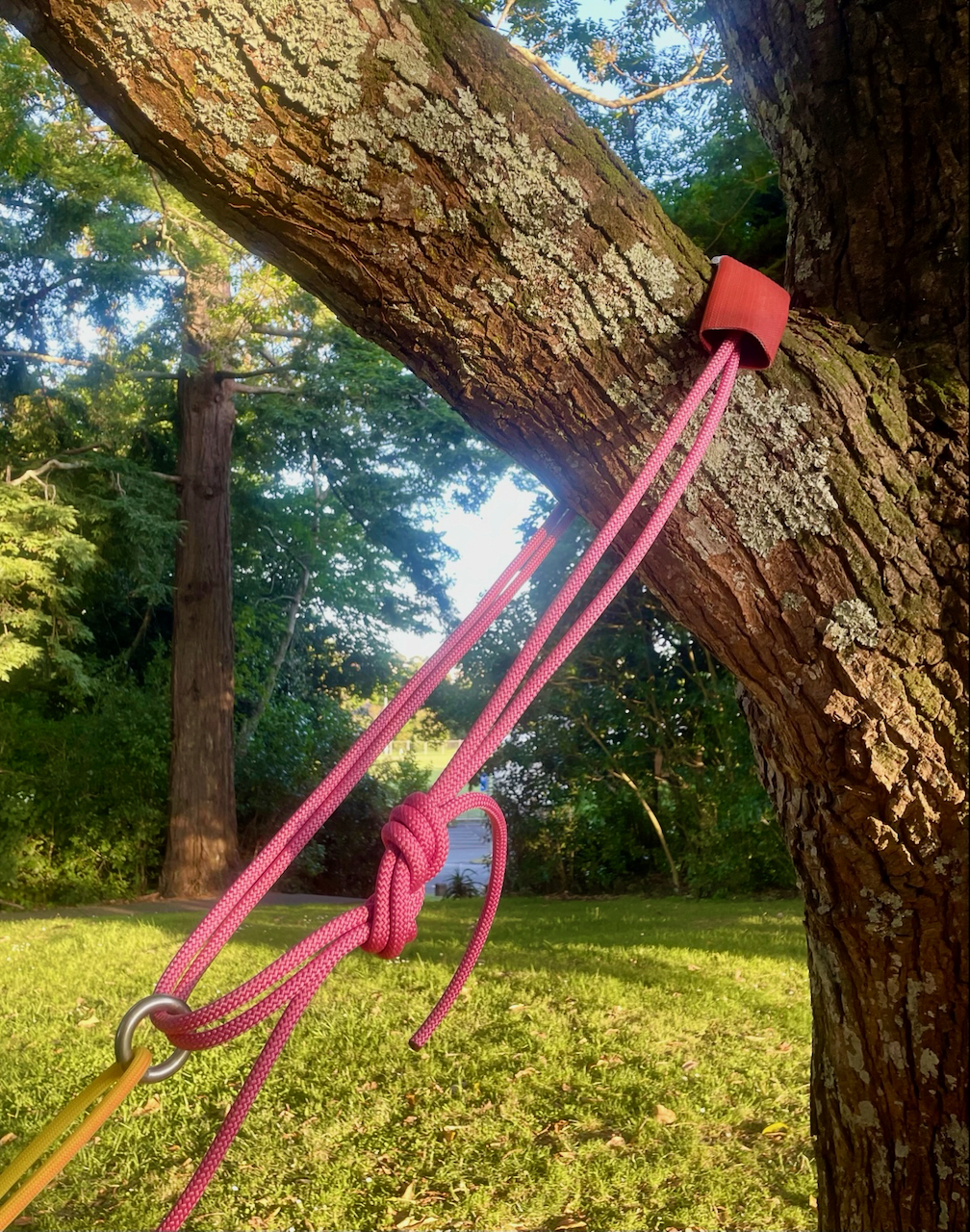
Adding a piece of 50mm THICK rubberised hose pipe to the Australian ‘Roy Knot’ set up, works a treat.
This knot is a figure 8 knot rethreaded twice, giving independent loops, it is extremely strong.
This knot also has the benefit of spreading the load on the tree bark via 2 ropes. With the addition of a piece of robust hose pipe it all helps to protect your living anchor.
What you will need.
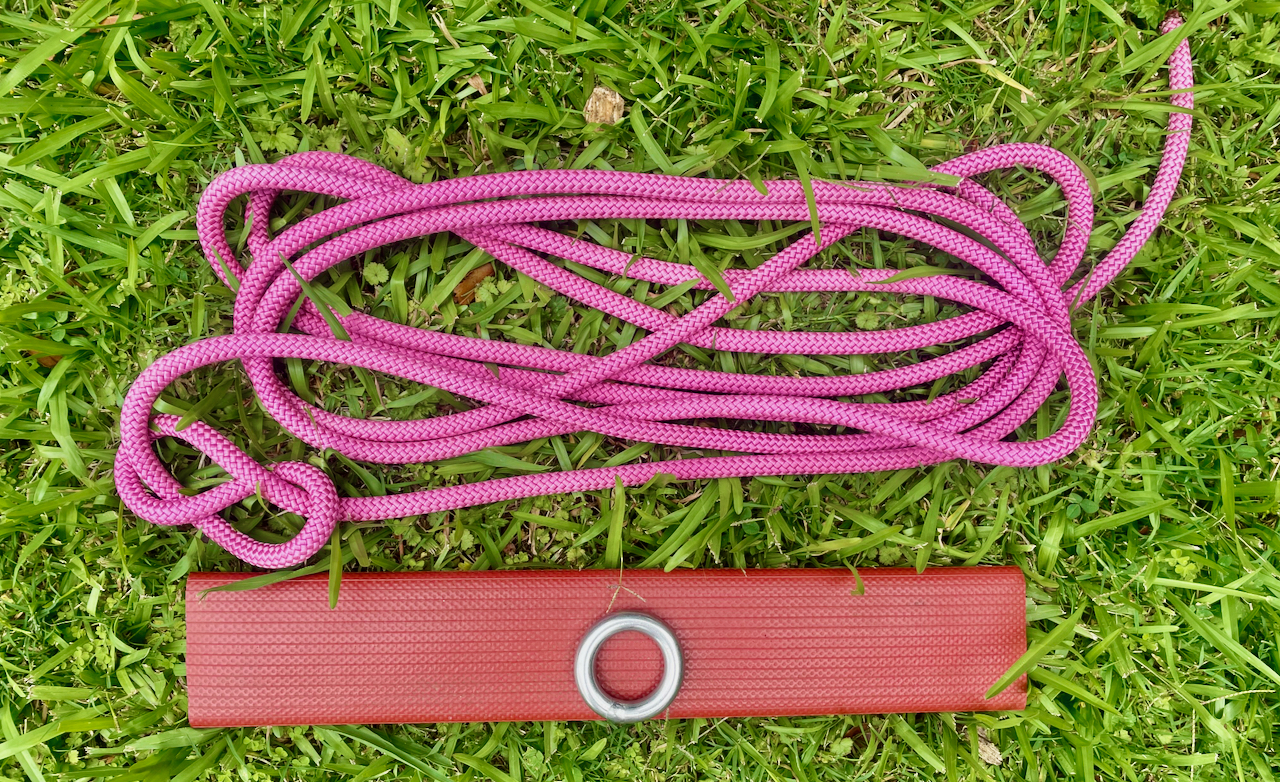
Some *NEW* Rope – 10mm /11mm thick. 4m or longer, even 6m++ long. This knot uses a lot of rope! https://accessgear.net/products-page/canyoning-rope/kordas-dana-10-canyoning-rope/
A piece of 50mm hose pipe.
1 x stainless steel abseil ring or genuine PPE maillon. Fit for purpose!! Not an uncertified quick link!https://accessgear.net/products-page/extras/round-stainless-steel-ring-o10mm/ Or https://accessgear.net/products-page/carabiners-and-maillon-rapides/maillon-rapide-peguet-wide-7mm-ppe-stainless-steel/
How to tie
1.Tie a figure 8 in the middle of your length of rope.
2. Place your ring/maillon on the rope. Thread the rope through the hose.
3. Rethread the figure 8
4.Take the other end of the rope, thread it firstly through the hose and secondly through ring/maillon, then rethread the figure eight once more.
*OLD ROPE* for a new anchor, won’t do!
When you do replace an anchor of any kind, let your community know – www.kiwicanyons.org under submit a trip report.
* you will always need to fully check any anchor prior to putting your weight on it*